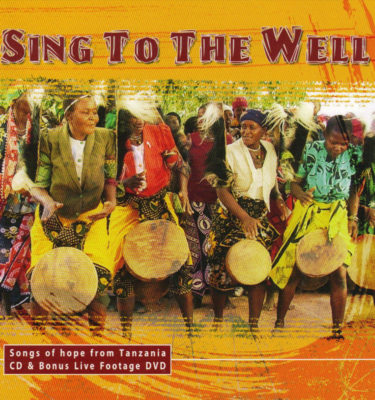
In the context of the last few days news of famine, Euro bail outs and gutter press – its good to remember the amazing planet that we are part of. Take a moment and smile at the diversity.
Here’s a reminder of a blog I wrote in 2009 when the word crisis was banded about a lot – “In this season where the media is bombarding us with the financial crisis that is crippling the world my question is what is our response? Interestingly like most Mandarin words, the word “crisis” (wēijī) consists of two syllables that are written with two separate characters, wēi and jī. These separate characters mean “danger” and “opportunity”. Maybe this paradox can point us towards a counter cultural view point. Do we choose to worry about the danger that may be lurking around the corner or do we look for opportunities to be generous?”
Here is a fascinating documentary on the power of arts to manipulate people within communist North Korea. Jason Carter a musician friend who has played in the country forwarded this to me. Read More
 Check out this fascinating program on the World Service about the Slow Food movement and how we need to learn from indigenous peoples.
“Sheila Dillon hears from some of the world’s disappearing food tribes and finds out why efforts are underway to preserve indigenous food cultures in north America, Scandinavia and in Scotland’s Highlands and Islands.”
Thoughts on the journey – Read More
In many shamanic societies, if you came to a medicine person complaining of being disheartened, dispirited, or depressed, they would ask one of four questions: When did you stop dancing? When did you stop singing? When did you stop being enchanted by stories? When did you stop finding comfort in the sweet territory of silence?
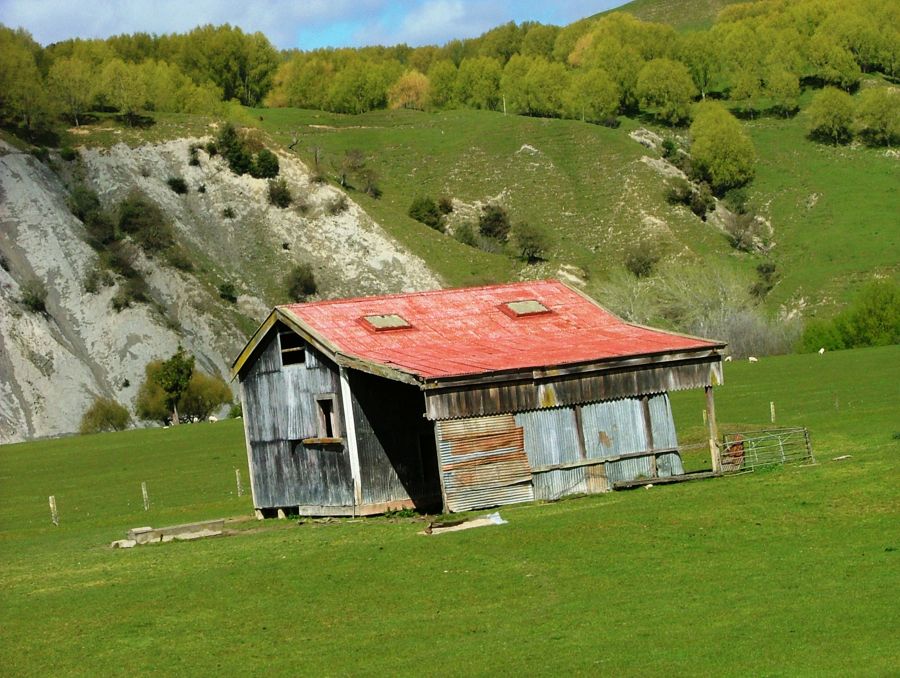 On a hillside, high above a ravine lived a small boy and his family. There home was a very ordinary wood shack surrounded on three sides by trees. Life seemed very boring to this young boy and he dreamed of excitement and adventure. Often he would sit on their wooden porch late in the evening and watch the valley below, change colours as the sun went down. On the other side of the valley was another building and on certain evenings there would be an amazing sight, a miracle would happen, the house would explode with amazing golden windows. He would sit and dream about who lived there, how special they must be to live in such an amazing place. Read More
There are many who believe that music can influence society. One such lady is Malian born Oumou Sangare sometimes referred to as “The Songbird of Wassoulou.” Her songs have spoken into woman’s rights, child marriage and polygamy. The track “Yala” is a song that hit the dance floors of Mali and criticises young people who roam late at night in search of pleasure – forgetting their traditional values.
Read More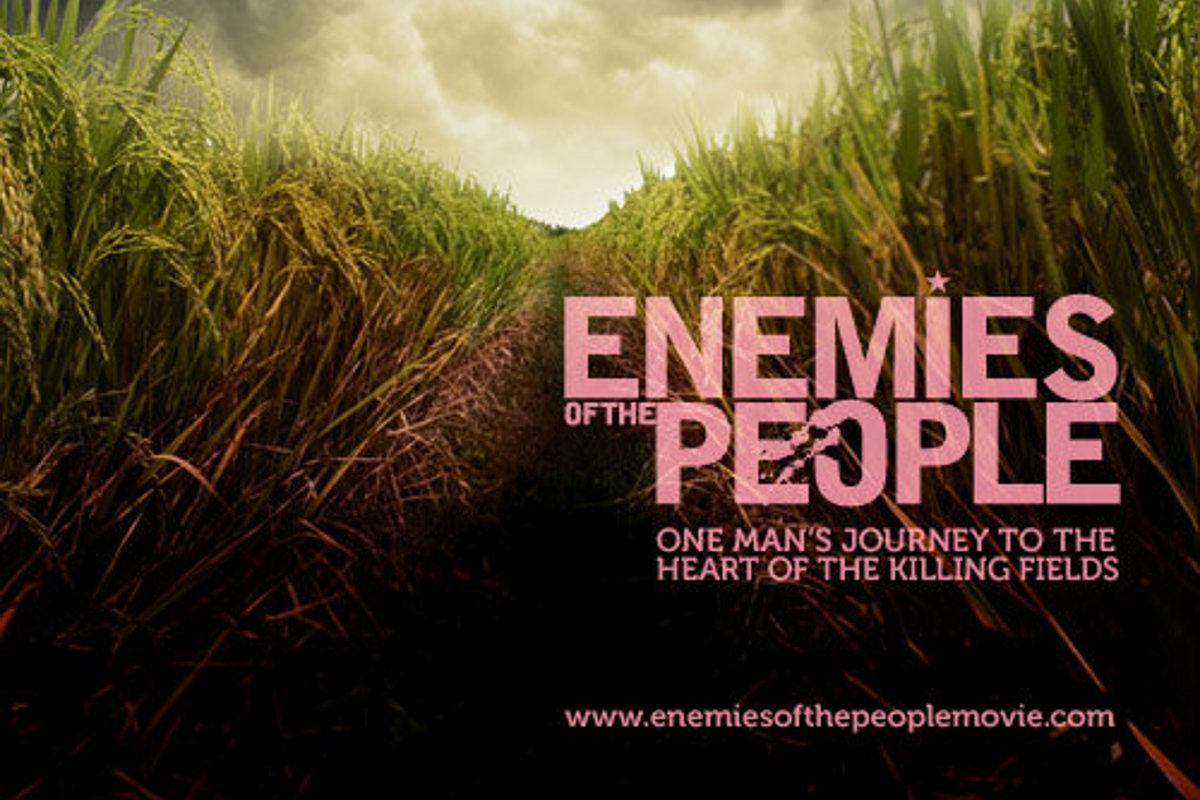 Just heard about a new film/documentary about the Killing Fields in Cambodia. Looks like a very interesting project called “Enemies of the people” … check out there web site here.
Many Western cultures are very word based and are very suspicious of silence. Yet for the Japanese, in some cases, less talk says more as the pauses and silence communicate much. Some would say that they are even suspicious of words as they are more concerned with actions.
In New Zealand, in certain circumstances the Maori people will meet for discussions on a marae (a community gathering place) in a wharenui (meeting house). There, a speaker will stand and deliver his talk and then sit down and there will be silence, to allow others to contemplate his words before the next speaker.
I once heard a wise man talk about the many words used in religion, he said “Church is a little bit like a swimming pool – all the noise comes from the shallow end.”
In this season where the media is bombarding us with the financial crisis that is crippling the world my question is what is our response? Interestingly like most Mandarin words, the word “crisis” (wēijī) consists of two syllables that are written with two separate characters, wēi and jī. These separate characters mean “danger” and “opportunity”. Maybe this paradox can point us towards a counter cultural view point. Do we choose to worry about the danger that may be lurking around the corner or do we look for opportunities to be generous?
The legendary Mullah Nasir-ud-Din arrived in the city in the middle of Ramadan. The mullah was very hungry and when he heard that the Emperor was providing a free iftar (meal that breaks Ramadan fasting) to anyone who came to the Red Fort he immeadiately tied up his donkey and went along. However he was so dirty from his ride that the Master of Ceremonies placed him in a distant corner, far from the Emperor, and at the end of the queue for food. Read More